From tiny cool concepts, to scalable design system
Van digitale rebrand naar een design system dat snelheid en kwaliteit bracht.
Intro
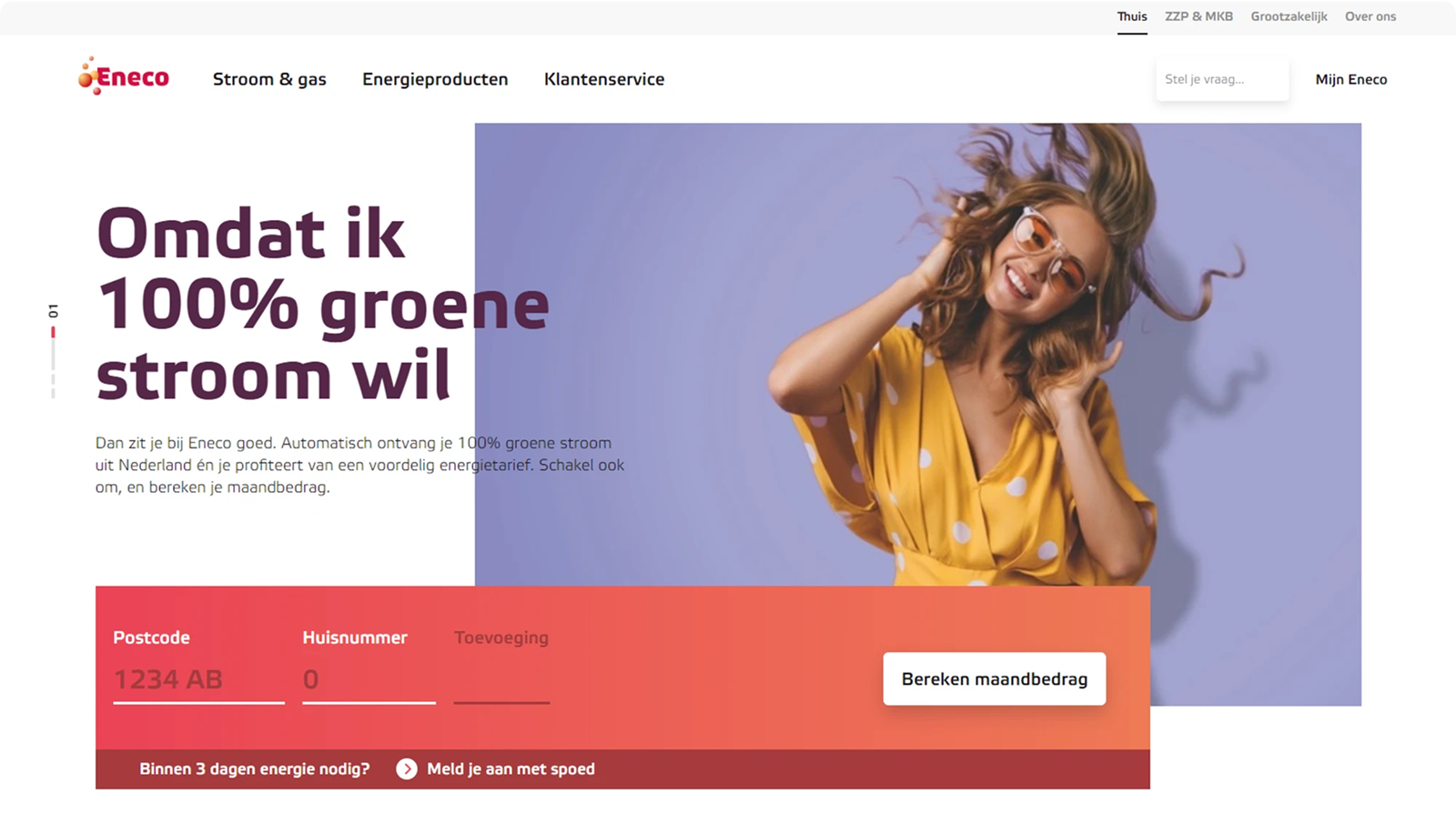
With the message 'Welcome to the new world' Eneco is transforming from an
energy supplier that supplies electricity and gas to Dutch households to a
sustainable service provider. I had a leading role in the creation of the
concept, design and design system of Eneco.nl. Based on interviews, research
and data, I worked closely with people from Eneco to renew the highly outdated
Eneco website & app.
Challenge
How can I transform a written strategy to a sustainable design language? Can
I find a way to keep consistency across different teams, with multiple
designers and developers?
Outcome
A sustainable design language that not only reflect Eneco's design
principles, but is also sustainable and ready to scale with its design
system.
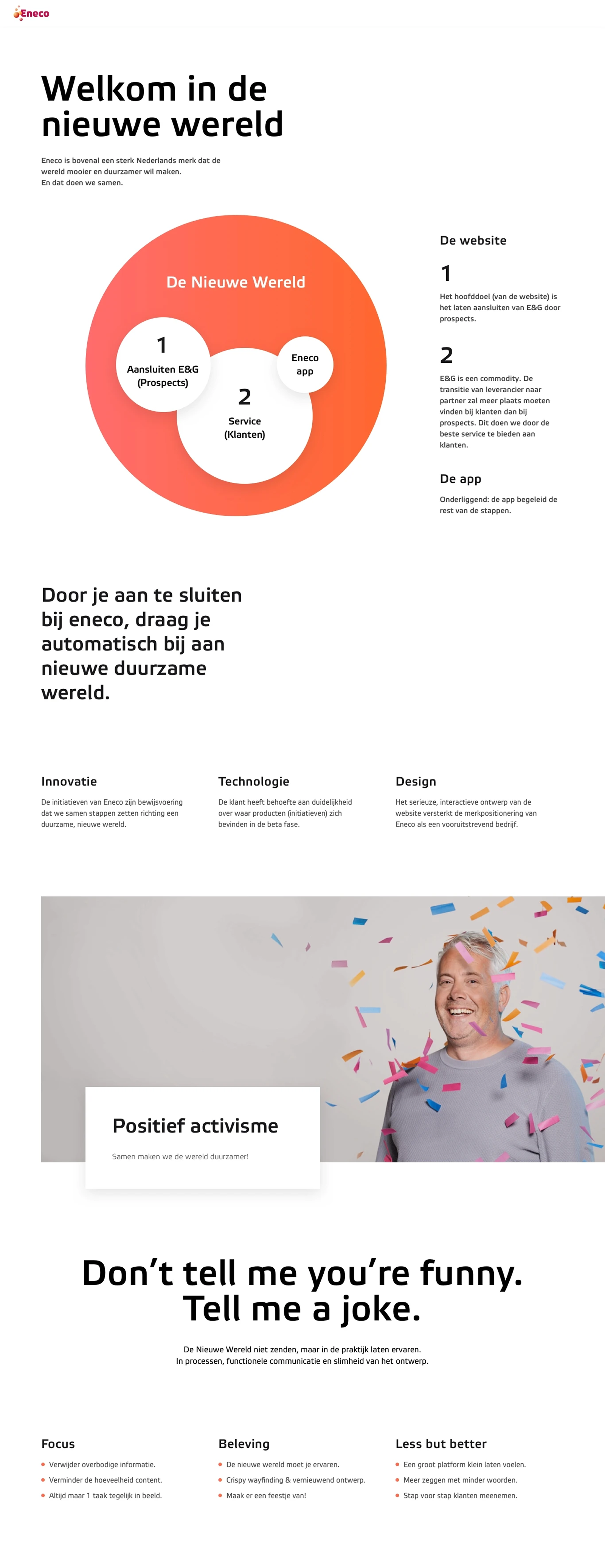
From strategy to design principles
The strategy was to make green energy attractive. Making this visible to
different consumers in The Netherlands is a super cool challenge. In a small
workshop with a few designers and stakeholders we came up with micro-concepts
and visuals to define how this new strategy should feel like. With the same
group we translated these concepts into so called design principles. These
guiding principles were (and still are) the foundation of all the digital
platforms. We made everything visual in a poster to inspire other designers,
developers and stakeholders. We welcomed them in the new world.
From design principles to design
Translating tiny cool concepts to a sustainable design sounds like a huge
thing, but is pretty easy. The trick is to don't push them into your design,
but implement them when the right opportunity is there.
Plot twist
The right opportunity won't come by just waiting, at least that's what I've
learned. With 850K monthly users, having 5MIL monthly page views, you have to
find a way to implement awesome ideas with low effort but high impact. I used
these 3 steps to find my own 'right time' to implement our cool ideas.
Setting up customer profiles
The right opportunity won't come by just waiting, at least that's what I've
learned. With 850K monthly users, having 5MIL monthly page views, you have
to find a way to implement awesome ideas with low effort but high impact. I
used these 3 steps to find my own 'right time' to implement our cool ideas.
Analysing key pages & journeys
We made a list with all the key pages/journeys and made sure we had the
conversion rate and NPS scores included. By sorting them from low to high we
quite easily knew what journeys and pages were ready for something new!
Combined with the pages that have the biggest brand awareness we created a
shortlist to start with.
Concept testing
What I do a different from regular designers, is starting with 75% of the
test plan before designing anything. By having specific objectives, you also
have more specific user stories to work with. This gives me and the team
more time to get creative and brainstorm ideas based on our design
principles. We just created the right time to implement our tiny cool ideas!
I made mobile and desktop designs for key journeys and product pages.
Someone else did the actual test because I don't believe in doing a concept
test with your own design.
From design to pattern library
My worst nightmare is inconsistency and when others start reinventing the
wheel or use different patterns to solve the same problem. In 90% of all
product teams this is also where the biggest waste of money is. To prevent
this, I came up with three solutions that are still being used.
Creating a single source of truth
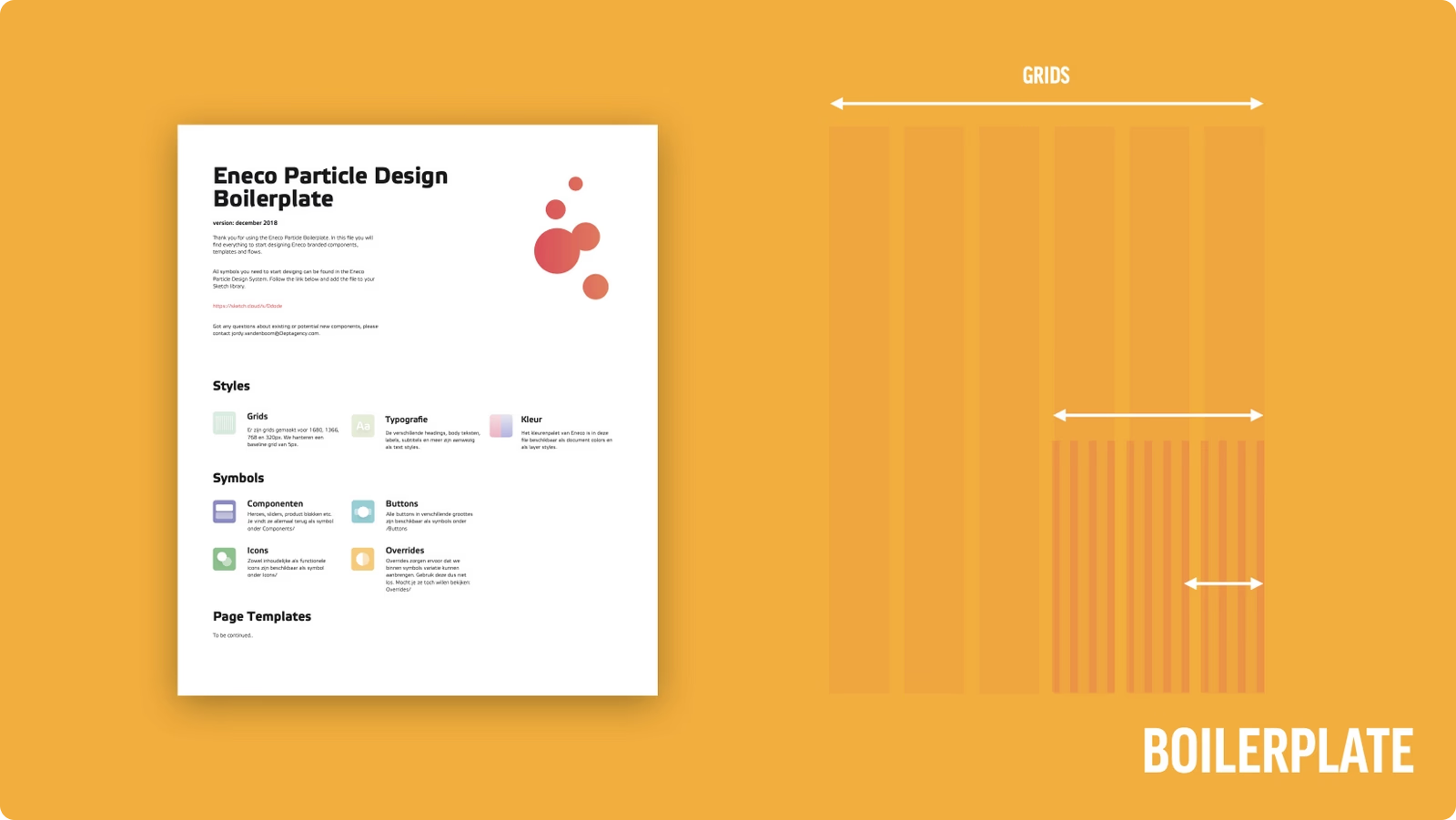
So the first thing I started with was creating a single source of truth for
design. I made a Boilerplate that lets every designer start with the same
blank canvas as I was working with. At least we know had the same starting
point.
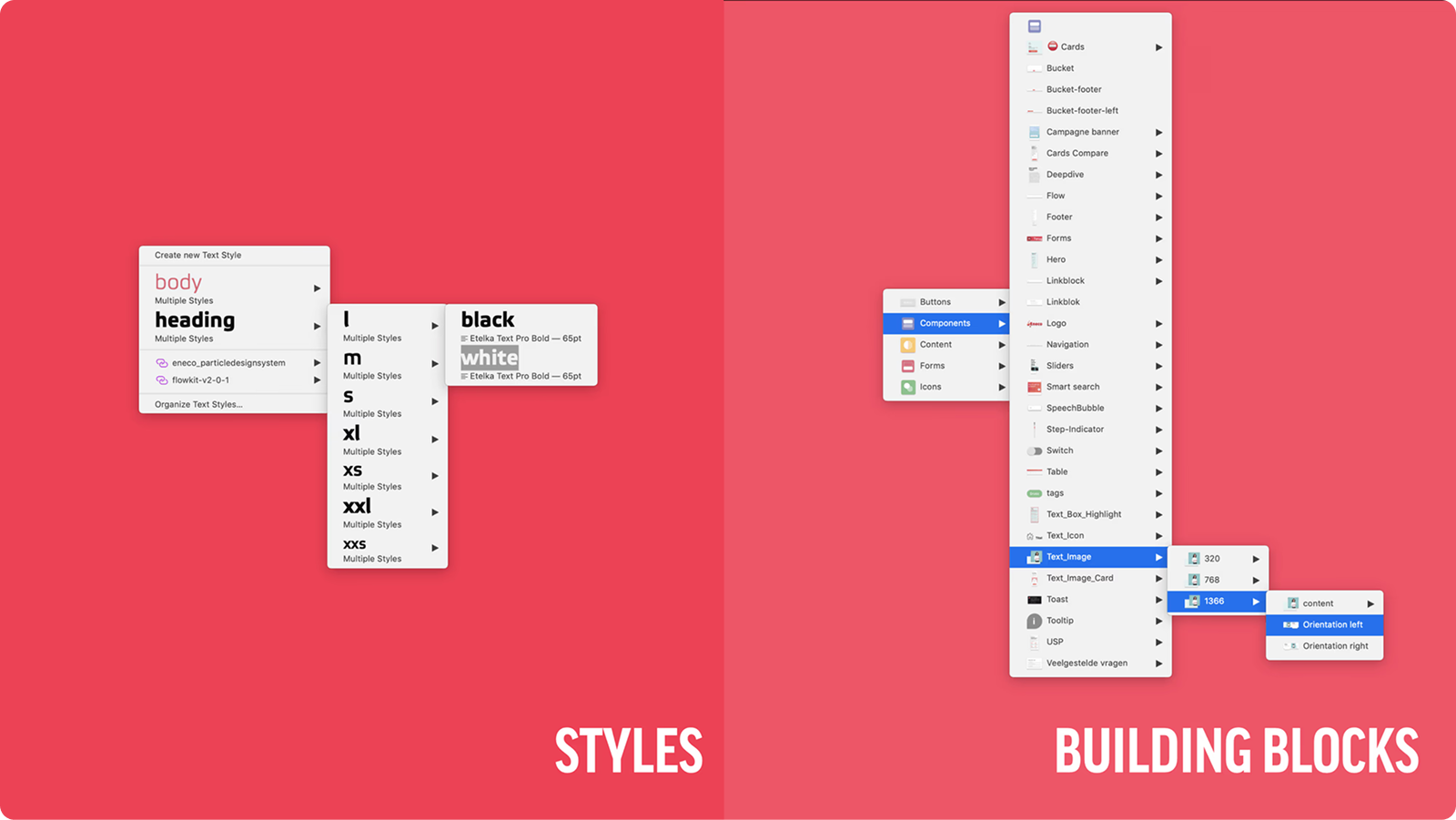
Up next I started to document all the other styles and building blocks. For
Eneco this was extremely important in the adoption process. It gave other
teams the opportunity to get familiar with a new style and it gave my insights
in the implementation priorities of other teams.
Documenting patterns
By having these patterns in design libraries was a great start, but we had a
problem... Designers started to adopt patterns, but developers had no clue
what we meant with a pattern. They basically implemented everything based on
the handovers we did, which wasn't super effective. So that's why we started
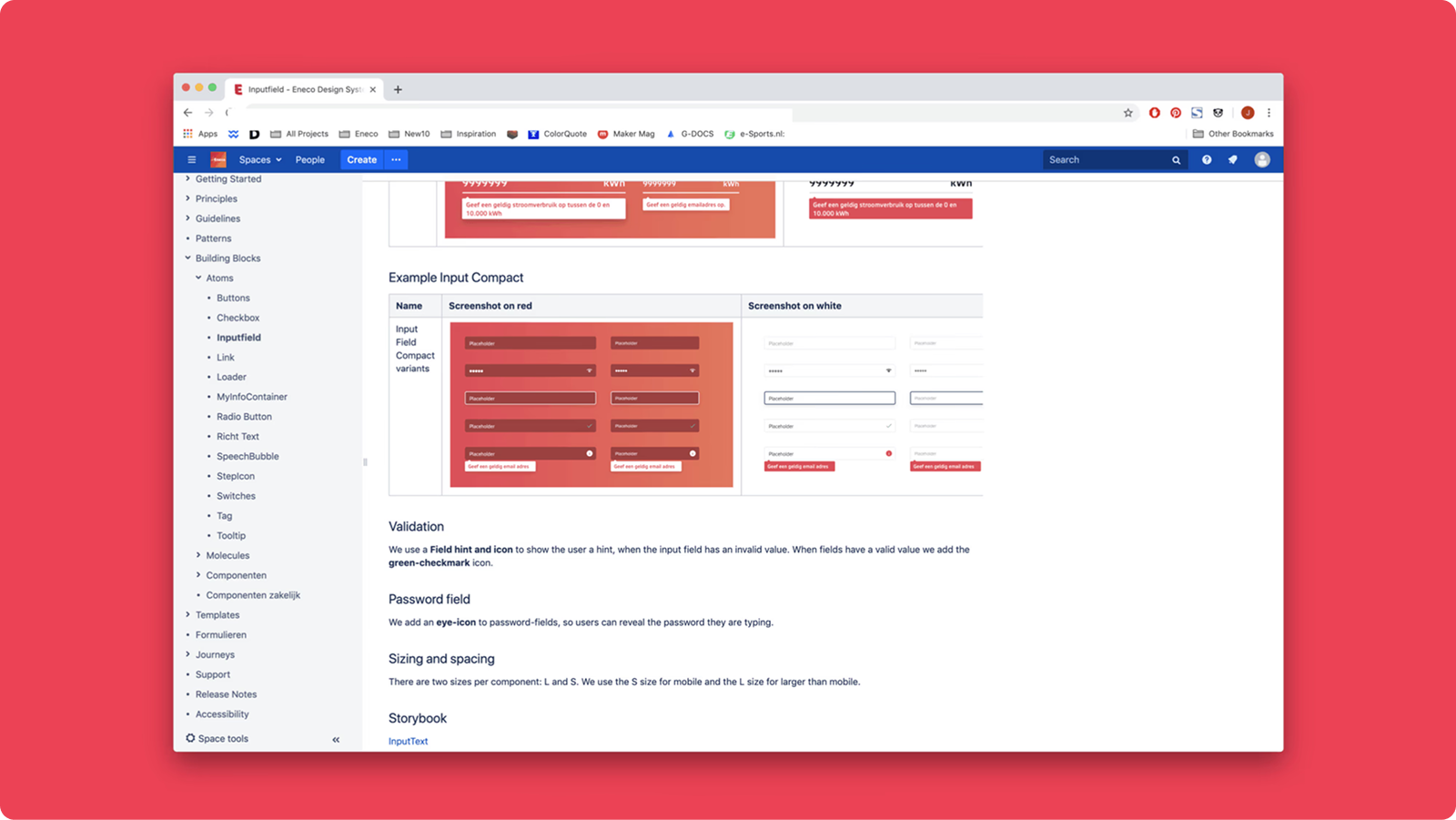
documenting every pattern in Confluence. We documented our principles,
guidelines on how to use colour, behavior of components and even patterns on
a template and journey level. By documenting these patterns I went from
designing a form in 4 different breakpoints with annotations, to write down
the type of form fields we needed. This upgraded our implementation speed by
at least 50%!
Defining the same language
One of the most interesting parts of the pattern library was when we started
to implement design tokens. I read a super interesting article by Nathan
Curtis that opened our teams eyes completely. By implementing design tokens we
finally started to have conversations in the same language. Small example.. as
a designer I think in pixels, so when I say 'this body-text should be 16
pixels', I say nothing weird. However, a developer doesn't combine pixels with
font sizes, they use REM. We fixed this by creating a simple tokens like:
'$font-size-m = 1rem;'. Now we don't only think the same, but also mean the
same. Which was HUGE in creating complex products at Eneco.
From pattern library to mature design system
What you've just read was about 1.5 years of work. Our system got more mature
and the organisation slowly started to see the benefits. As you've read I
don't had a hard strategy on pushing a design system. It grew organically,
which is in my opinion always the way to go. A design system is never the
goal, so after a while I also had to explain this to the organisation.
Company goals
More focus on the problem Don't 'over' design Get grip on what's made
Design system purpose
Create a universal design language Sustainable building blocks
Team goals
Pattern based design Uplift journeys Uplift Mijn Eneco
Quality control in the Eneco design system
After a while, as Head of Design, I noticed that my desk started to look more
like a ticket booth where I approved designs and managed stakeholders. This
made me super tired. That's why I came up with three solutions that structured
our communication to less but better.
Design Meets
Weekly design meet - Every week we had a design meet with all the digital
designers and the Head of Branding. We divided the meet in two chapters.
One about giving feedback on the actual design from a UX perspective and
the other part on what the role of the design system was.
Bi-weekly Heads meet
In the bi-weekly 'heads of meet' I discussed together with the head of
content, development and marketing our bigger epics. The goal of this
meeting was to get alignment on the bigger patterns components and
behaviours.
Quarterly design system presentation
In the quarterly meetings we presented our design system updates to about
100 stakeholders. They varied from management, to product owners, commerce,
communication and other designers that worked on Eneco.
Conclusion
After working almost 1.5 year on Eneco a lot has happened. While a few tiny
ideas grew to a sustainable platform, I personally grew a lot as well. Lets
wrap this case study up with a final top 3 items that I've learned while
working with Eneco.